September 2026
Oak, walnut, mahogany: recognising antique timbers
Colour deceives, weight lies less: simple clues for identifying a piece's timber before you buy.
A piece's timber is no detail: it tells its region, its period and a good part of its value. Learning to recognise the most common woods of European furniture takes a season, provided you look at the right things.
Oak first, the wood of the North. Heavy, open-grained, with pale flecks visible across the grain — the figure known as medullary rays. It is the timber of Flemish armoires, farmhouse tables and all regional furniture up to the 18th century.
Walnut next, the timber of refined furniture. Warm brown, fine even grain, it polishes to satin. It is the wood of provincial Louis XV and Louis XVI pieces, and of the finest commodes of the later 18th century.
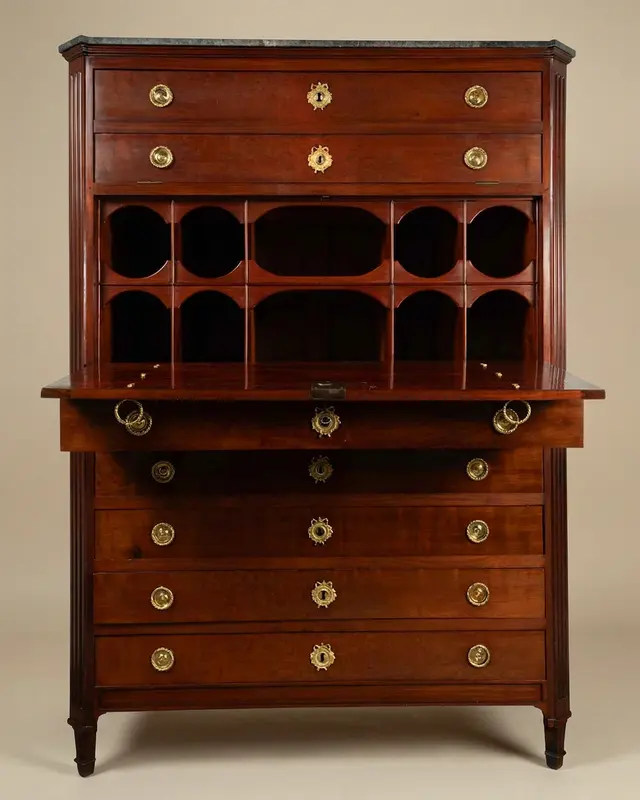
Mahogany arrives with neoclassicism. Imported from the West Indies in the late 18th century, reddish, tight-grained, it becomes the wood of the Directoire, the Consulate and the Empire — and its appearance on a piece is already a dating clue.
Cherry and fruitwoods mark the finer regional work: pale yellow to greenish grey, very dense, almost invisible grain. Cherry leans towards golden red and ages beautifully.
One last marker: weight. An old oak piece is heavy; a veneered showpiece is light beneath its rich appearance. Lifting one corner — where possible — sometimes says more than a long inspection.
At Maison Boitel the timber is stated on every listing where the dealer knows it, and the seller answers questions directly — with 0% commission between you and them.