September 2026
Objects of curiosity: what collectors are really after
Cabinets of curiosities, naturalia, instruments: a field where an object's story matters more than its material.
The cabinet of curiosities was born in the 16th century, before museums: it gathered without hierarchy naturalia (fossils, shells, minerals), artificialia (worked objects) and scientifica (instruments). Today's taste for curiosities descends directly from it.
What gives a curiosity its value is almost never its material. It is provenance, singularity and presentation: an old base, a handwritten label, a collection inventory number are sometimes worth more than the object itself.
Three families carry the market today. Prepared fossils and minerals, including fossil art worked into tops and useful objects; 19th-century scientific and medical instruments; and European ethnographic objects — moulds, tools, votive pieces.
A necessary warning: regulation. Taxidermy of protected species, ivory and certain corals are strictly controlled in Europe. A serious dealer will hand over CITES paperwork where it exists, or will not buy the piece at all.
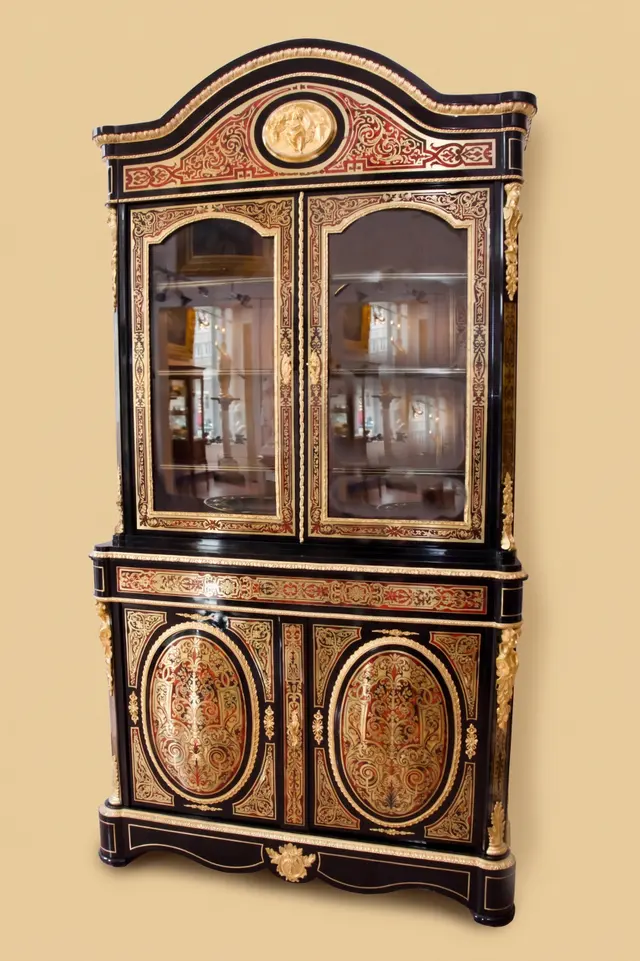
In presentation, the rule is to group. Three fossils aligned on a bare shelf read as a collection; the same three scattered through a house go unnoticed. An old display case, however modest, instantly turns a set of objects into a cabinet.
It is an ideal field to begin with: entry prices stay low, pieces are small, and each comes with a story you can tell.