September 2026
The price of antique furniture: how value is formed
Period, timber, condition, fashion: the four factors that set a piece's price, and why two similar-looking commodes are not worth the same.
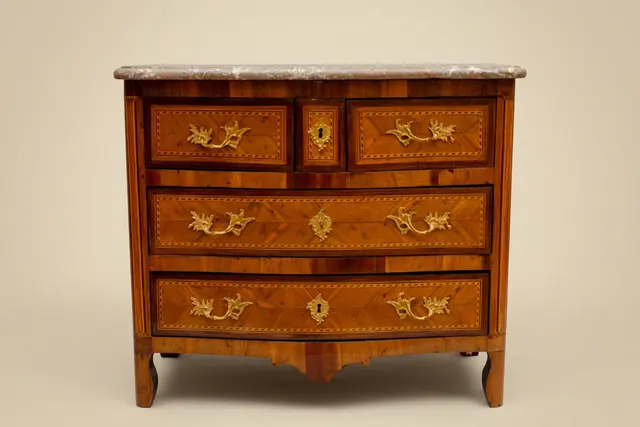
Nothing resembles an antique commode more than another antique commode — and yet one can be worth five times the other. The price of an antique is not arbitrary: it comes from four factors you can learn to read.
Period first. A piece made in the style of its own time — a Louis XVI commode built under Louis XVI — is worth more than a later copy, however good. The date is read in the construction: sawing, joints, hardware, backs and bottoms.
Timber and quality of execution next. A walnut veneer on oak, finely dovetailed drawers, careful marquetry in hidden places: all of this was expensive to make in the 18th century, and is expensive today.
Condition next — the most misunderstood factor. A piece in original condition — untouched patina, bronzes never cleaned, period locks — is often worth more than an over-restored one, because its history has not been erased. Conversely, structural defects (active woodworm, replaced rails, a remade top) pull the price down sharply.
Fashion last. Taste pushes some categories up — brutalist and Art Deco furniture today — and leaves others aside. Buying what is temporarily out of fashion, in fine quality, has historically offered some of the best value on the market.
At Maison Boitel every piece is presented by the dealer who holds it, with its dimensions, period and condition — and the sale happens directly with them, with 0% commission, which keeps the price at its fairest.