September 2026
Art Deco furniture: how to choose it today
Rich veneers, taut lines, brass: three rules for using an Art Deco piece without overloading a room.
Art Deco came back into interiors through the design door, not the antiques door. It is bought today for its taut lines and its materials, more than for its date.
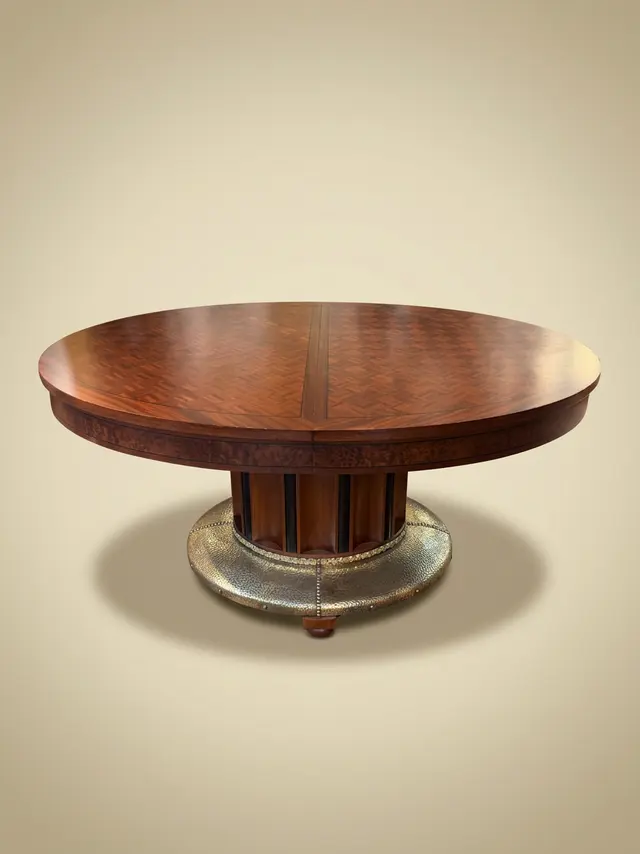
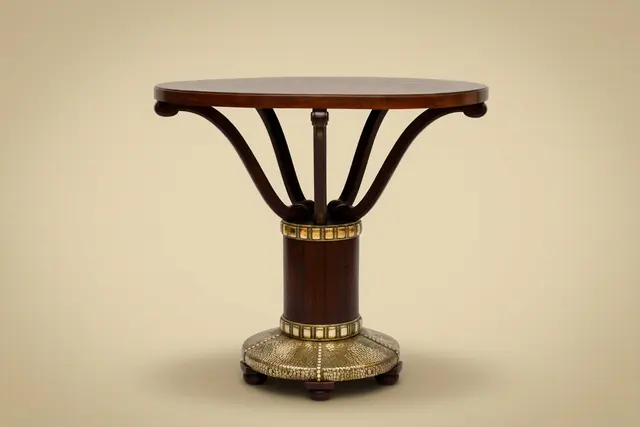
The first rule is to choose the material before the shape. A veneer of amboyna burr, macassar ebony or rosewood is what makes Art Deco: a frank, almost graphic wood figure, polished to a mirror. An Art Deco shape in stained oak does not have the same effect, and does not take the same light.
The second rule is to count the pieces. Two Art Deco items in one room is enough: a sideboard and an armchair, or a coffee table and a mirror. Beyond that, the room tips into a film set.
The third rule concerns brass. Sabots, galleries, handles: Art Deco uses it like a pencil line. Do not make it shine. Slightly oxidised brass sits well in a contemporary interior; polished brass sends it back to the 1980s.
On the market, signed French pieces reach high figures, but anonymous Art Deco furniture — Belgian, French, Dutch — remains very affordable. An unsigned macassar sideboard often costs less than a mid-range new one, and will always be worth something.
Finally, look for structure: a superb veneer sometimes hides a tired carcase. Open the doors, pull the drawers, press a corner. Veneer can be restored; a warped carcase, far less easily.